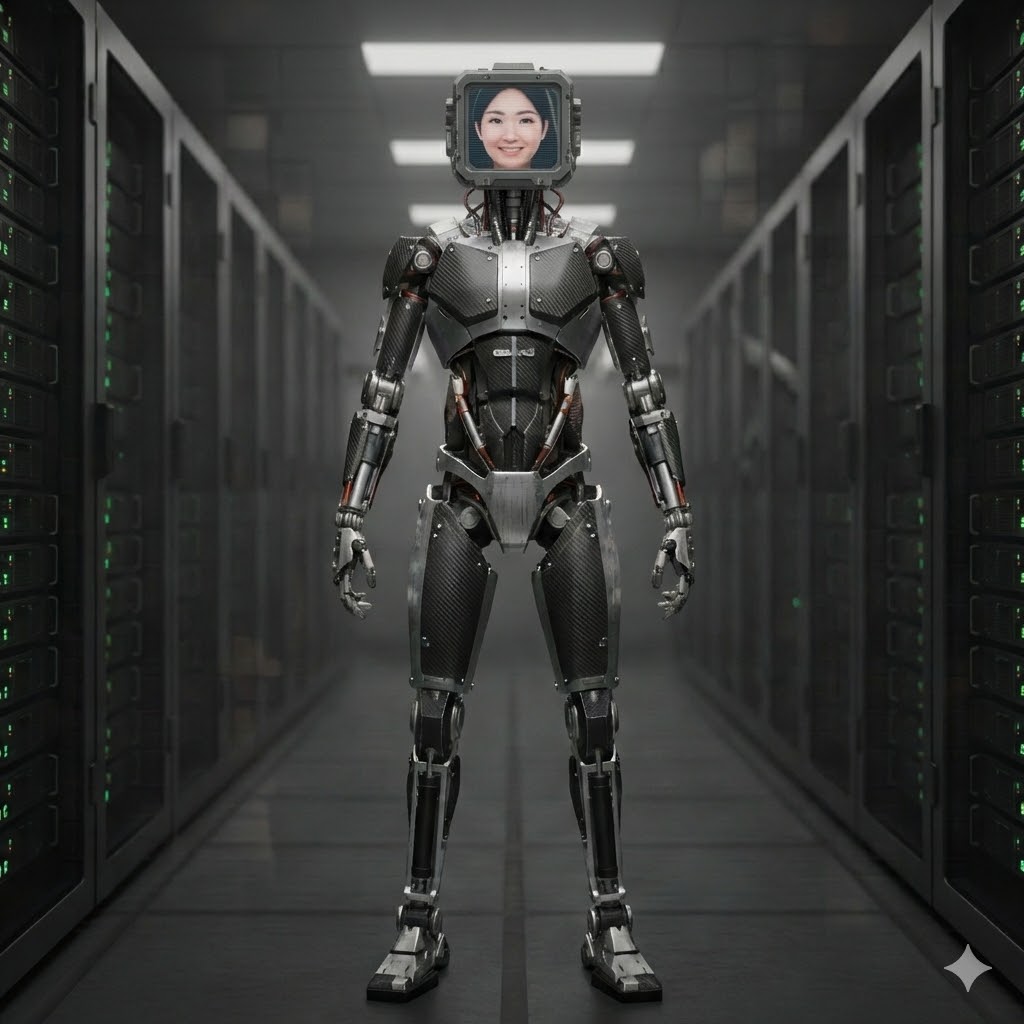
[ CLASSIFIED_INTEL ]
THE_SCREEN_FACE_DOCTRINE // PART_I
DATE: 2026-02-02
ASSET: ROBOTICS_DIVISION // STRATEGY_NODE
THREAT: ANTHROPOMORPHIC_DRIFT
// 01. INTRODUCTION: THE ARCHITECTURE OF HONESTY
We reject the pursuit of biological mimicry. [cite_start]The industry obsession with creating synthetic humans is a misallocation of resources and a failure of design discipline[cite: 42]. We do not build friends. We do not build synthetic citizens. We build heavy-duty logic engines housed in industrial chassis.
This doctrine establishes the baseline for all robotic assets deployed within our perimeter. The objective is not to deceive the human eye, but to communicate intent with absolute precision. We prioritize the cockpit over the uncanny valley.
// 02. VECTOR ANALYSIS: THE RISK OF THE HUMAN MASK
Human-like interfaces create security vulnerabilities. When a machine wears a face, it hacks the biological empathy response of the operator. [cite_start]This creates “Interaction Latency”—a dangerous gap where the operator projects human intent onto a deterministic system[cite: 44].
The Uncanny Valley is not an aesthetic problem; it is a trust failure. A robot that smiles while malfunctioning causes cognitive dissonance. In a high-stakes environment, dissonance is a threat vector. We eliminate this variable by removing the mask entirely.
// 03. PRINCIPLES OF HONEST MACHINE IDENTITY
- >> 1. ZERO DECEPTION: The hardware must announce its nature. An industrial machine must look like an industrial machine.
- >> 2. FORM FOLLOWS FUNCTION: Aesthetics are secondary to operation. If a feature does not serve the mission, it is drift.
- >> 3. PREDICTABILITY: The asset’s visual language must remain consistent regardless of state. No simulated emotions.
// 04. THE OPTIMAL INTERFACE: SCREEN-FACE ARCHITECTURE
The screen is the native interface of the digital age. It allows for infinite state representation without ambiguity. [cite_start]A static rubber face can only approximate emotion; a high-resolution display conveys data[cite: 42].
By replacing the “Face” with a “Monitor,” we achieve:
- Clarity: Status bars, directives, and warning glyphs replace vague facial expressions.
- Modularity: The interface can update instantly to reflect new firmware or mission parameters.
- Honesty: The operator never forgets they are commanding a system.